


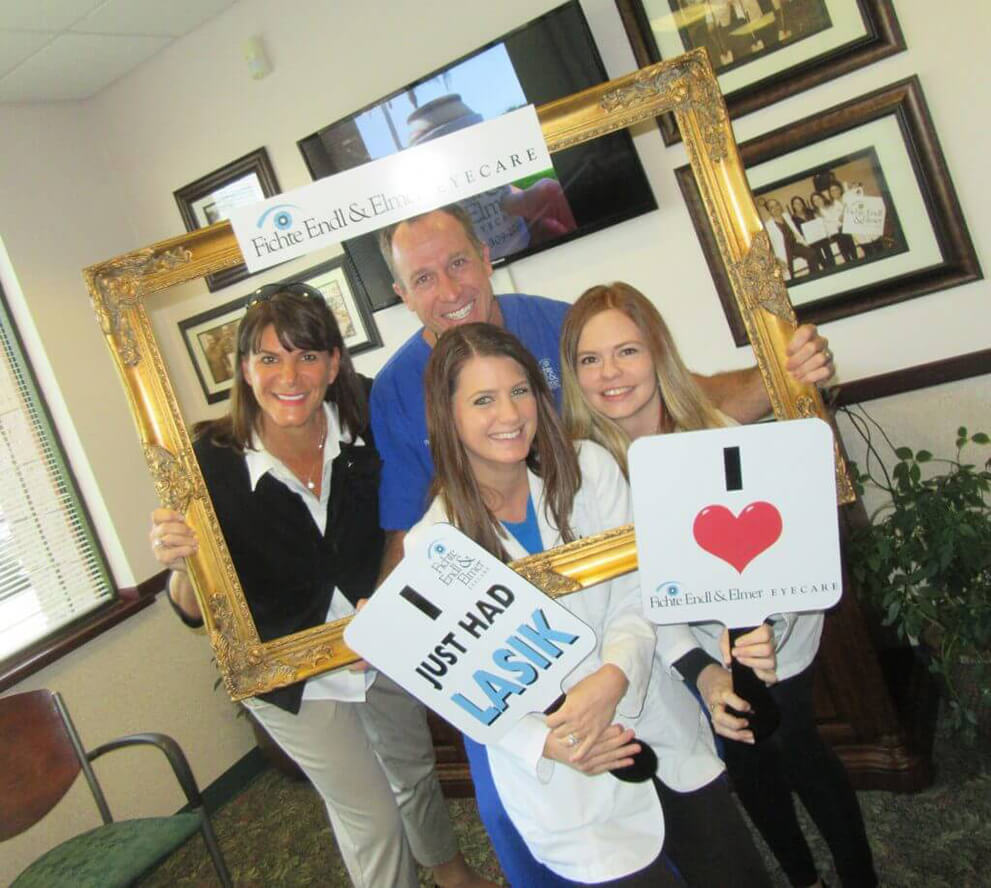
Fichte, Endl & Elmer Eyecare provides LASIK evaluations for adults in Buffalo and Western New York through its Amherst and Niagara Falls offices. LASIK uses a laser to reshape the cornea and may reduce dependence on glasses or contact lenses for eligible patients with nearsightedness, farsightedness, or astigmatism. Candidacy is determined through a comprehensive examination because prescription stability, corneal shape and thickness, tear-film health, pupil measurements, medications, age-related lens changes, and other eye conditions can affect whether LASIK is appropriate.
Care is connected to Michael J. Endl, M.D. and Thomas R. Elmer, Jr., M.D., whose biographies describe their refractive procedure experience. The evaluation also considers whether ZEISS SMILE, PRK/ASA, EVO ICL, refractive lens exchange, glasses, or contact lenses may be a better fit. No procedure can guarantee a particular result, and LASIK does not prevent future presbyopia, cataracts, or other age-related eye changes.
Who May Be Considered for LASIK?
Many candidates are adults with a stable prescription, healthy corneas, manageable dry-eye findings, and realistic expectations. Pregnancy or nursing, prescription instability, significant dry eye, keratoconus or other corneal disease, cataracts, advanced glaucoma, certain medications, autoimmune disease, prior eye surgery, or other medical and eye conditions may affect eligibility or timing. The surgeon reviews these factors before recommending treatment.
How LASIK Compares With Other Options
| Option | Approach | Recovery considerations | Why another option may be recommended |
|---|---|---|---|
| LASIK | Creates a thin corneal flap before laser reshaping. | Many patients notice early improvement, but healing and vision fluctuation vary. | Corneal measurements, dry eye, prescription, or lifestyle may make another option preferable. |
| ZEISS SMILE | Uses a small incision without a LASIK flap. | Recovery and eligibility depend on the approved treatment range and examination. | Not every prescription or eye is within the device’s indicated range. |
| PRK or ASA | Treats the corneal surface without creating a flap. | Early recovery is generally slower while the surface heals. | May be considered when flap-related, corneal, or lifestyle factors matter. |
| EVO ICL | Places a prescription lens inside the eye rather than reshaping the cornea. | Intraocular procedure with separate testing and follow-up needs. | May be considered for some qualifying prescriptions or corneal profiles. |
| Refractive lens exchange | Replaces the natural lens with an intraocular lens. | Intraocular surgery with lens-selection considerations. | May be discussed when age-related lens changes or presbyopia are important factors. |
Potential Benefits, Limitations, and Risks
The goal of LASIK is to reduce dependence on glasses or contact lenses, but some patients still need correction for certain tasks or later age-related changes. Possible effects and complications include dry eye, glare, halos, starbursts, fluctuating vision, undercorrection or overcorrection, reduced low-contrast vision, infection, inflammation, flap-related problems, and the need for additional treatment. Rare complications can be serious. The surgeon should explain the risks that apply to the individual examination findings and the laser system being considered.
Recovery and Follow-Up
Vision may improve early, but it can fluctuate while the eyes heal. Patients receive instructions about prescribed drops, eye protection, rubbing the eyes, driving, exercise, swimming, makeup, work, and other activities. Follow-up visits are important even when the eyes feel comfortable. Contact the surgical team promptly for severe pain, a sudden decrease in vision, increasing redness, discharge, injury, or another unexpected symptom.
Questions to Ask When Choosing a LASIK Surgeon
- Who will perform the procedure and who provides follow-up care?
- What training and current experience are relevant to my prescription and eye findings?
- Which laser system and treatment range would be used?
- What alternatives should I consider, and why?
- What results, side effects, complications, and enhancement policies should I understand?
- Who is available if I have an urgent concern after surgery?
Cost, Reviews, and Scheduling
LASIK pricing can vary according to the technology and care plan. Review the practice’s LASIK cost and financing information, read current patient reviews, or compare LASIK, SMILE, and PRK. Call 1-800-309-2020 or request a LASIK evaluation. A comprehensive evaluation is required before a treatment recommendation is made.