


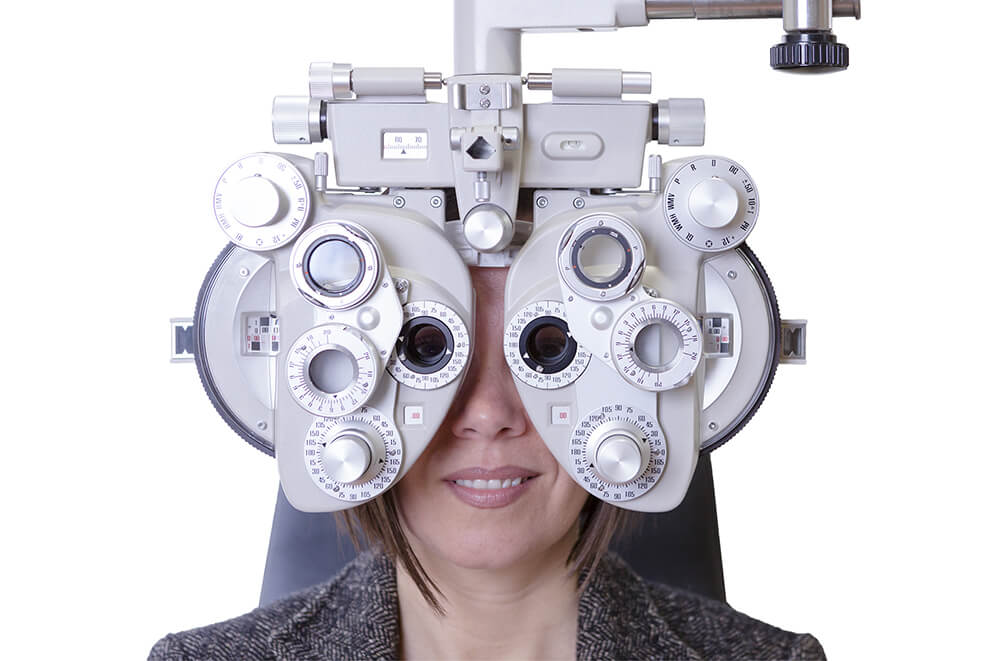
Fichte, Endl & Elmer Eyecare provides comprehensive eye examinations at its Amherst and Niagara Falls offices for patients from Buffalo and Western New York. An eye exam does more than update a glasses prescription. It can evaluate visual acuity, refraction, eye pressure, pupils, eye movements, the cornea and lens, the retina and optic nerve, and symptoms that may be connected to dry eye, cataracts, glaucoma, retinal disease, diabetes, medications, or another health condition. The testing performed depends on age, symptoms, health history, family history, known eye disease, contact-lens use, and the reason for the visit.
What a Comprehensive Eye Exam May Include
- Review of vision concerns, symptoms, medications, family history, and medical conditions
- Visual-acuity testing and refraction to evaluate a glasses or contact-lens prescription
- Pupil, eye-movement, alignment, and peripheral-vision screening
- Eye-pressure measurement
- Slit-lamp examination of the eyelids, tear film, cornea, iris, and lens
- Dilated examination of the retina and optic nerve when appropriate
- Additional imaging, visual-field testing, corneal measurements, dry-eye testing, or contact-lens evaluation when indicated
Why Dilation May Be Recommended
Dilating drops widen the pupil so the doctor can examine more of the retina and optic nerve. Dilation may temporarily blur near vision and increase light sensitivity. Whether it is recommended depends on age, symptoms, diabetes, high blood pressure, family history, known disease, and the reason for the visit. Patients should ask whether they may need sunglasses, transportation, or schedule adjustments after the examination.
How Often Should You Have an Eye Exam?
There is no single interval for every patient. Exam frequency depends on age, vision correction, symptoms, diabetes or other health conditions, family history, medications, contact lenses, previous surgery, and known eye disease. The eye doctor recommends a schedule based on individual risk and examination findings.
Symptoms That Should Not Wait for a Routine Visit
Sudden vision loss, flashes with a sudden increase in floaters, a curtain or shadow in vision, severe eye pain, chemical exposure, penetrating injury, new double vision, a very red eye, or neurologic symptoms require prompt evaluation. Call an eye-care professional or seek emergency care based on the severity of the symptoms.
Eye Exams for Glasses and Contact Lenses
A refraction determines the optical prescription, while a contact-lens evaluation also considers corneal shape, lens material and design, fit, movement, comfort, eye health, replacement schedule, and hygiene. A medical eye exam and a routine vision or contact-lens service may be billed differently, so patients should ask how medical insurance and vision benefits apply.
Eye Exams Before Surgery
Cataract, LASIK, SMILE, PRK, EVO ICL, refractive lens exchange, glaucoma, corneal, or eyelid procedures require additional testing beyond a routine examination. The evaluation is matched to the procedure and may include dilation, corneal mapping, lens measurements, retinal assessment, dry-eye evaluation, and discussion of benefits, alternatives, recovery, and risks.
Ophthalmologist or Optometrist?
Both professions participate in eye care. Optometrists commonly provide comprehensive examinations, glasses and contact-lens services, medical eye care, and surgical co-management. Ophthalmologists are medical doctors who diagnose and treat eye disease and perform surgery. See Ophthalmologist vs. Optometrist for a patient-friendly comparison.
Schedule an Eye Exam
Eye exams are available at the Amherst office and Niagara Falls office. Call 1-800-309-2020 or request an appointment. Patients can also meet the optometrists and meet the ophthalmologists.