


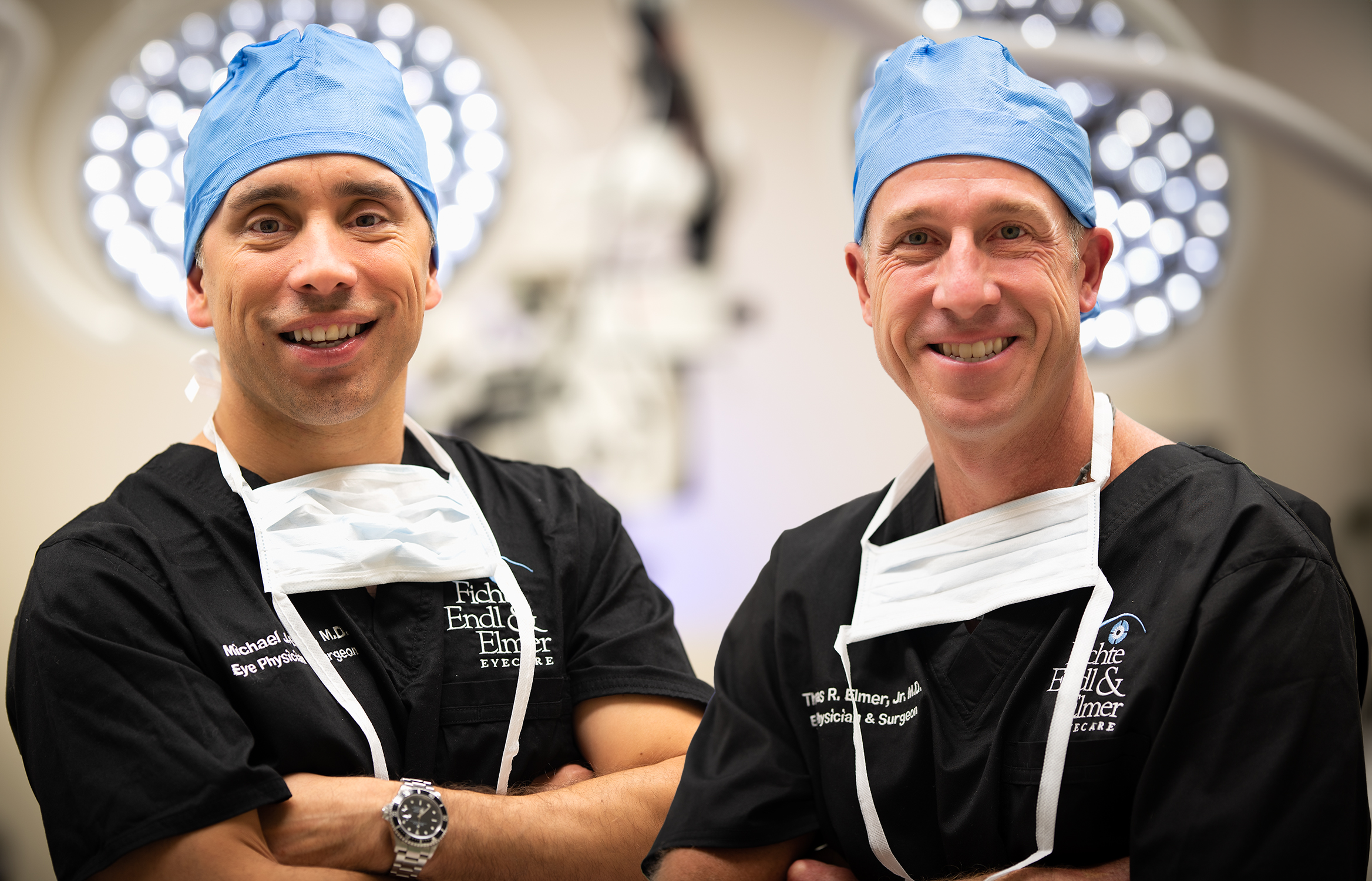
Fichte, Endl & Elmer Eyecare provides cataract evaluations and surgery for patients in Buffalo and Western New York through its Amherst and Niagara Falls offices. The practice reports that its surgeon team has completed more than 100,000 cataract procedures. Care is connected to Michael J. Endl, M.D. and Thomas R. Elmer, Jr., M.D., whose biographies describe their cataract, refractive, corneal, glaucoma, and pediatric ophthalmology experience.
Cataract surgery removes the cloudy natural lens and replaces it with an intraocular lens. The recommendation to have surgery is based on how cataracts affect daily activities, examination findings, other eye conditions, and a discussion of benefits, alternatives, risks, and timing. Lens selection is individualized because no lens category is appropriate for every eye or every visual goal.
When Cataract Surgery May Be Considered
Cataracts can cause cloudy or dim vision, glare, halos, fading colors, frequent prescription changes, and difficulty reading or driving at night. Surgery may be considered when these changes interfere with work, driving, reading, hobbies, or independence, or when a cataract prevents the doctor from examining or treating another eye condition. Cataracts do not always need to be removed immediately, so timing should be discussed with an eye doctor.
- Cloudy, blurred, or dim vision
- Increasing difficulty seeing at night
- Sensitivity to light, glare, or halos
- Need for brighter light when reading
- Frequent eyeglass prescription changes
- Colors that appear faded or yellowed
How Cataract Lens Decisions Are Made
Lens choice begins with the health of the eye and the accuracy of preoperative measurements. The surgeon also considers astigmatism, previous eye surgery, glaucoma or retinal disease, dry eye, night-driving needs, work and hobby demands, preferred reading distance, tolerance for glare or halos, cost, and how strongly a patient wants to reduce dependence on glasses. A premium lens category is not automatically better for every patient.
| Lens category | Intended range | Astigmatism correction | Common considerations | Glasses expectations |
|---|---|---|---|---|
| Monofocal | Usually one selected distance | Standard models do not correct regular corneal astigmatism | Established option with a single focal target | Glasses are commonly needed for other distances |
| Toric | Usually one selected distance | Designed to reduce qualifying regular corneal astigmatism | Requires accurate measurements and appropriate eye anatomy | Reading or other glasses may still be needed |
| Multifocal or trifocal | Designed to provide more than one range | Some designs are available with toric correction | May involve glare, halos, contrast tradeoffs, and stricter candidacy | May reduce, but does not guarantee freedom from, glasses |
| Extended depth of focus | Designed to extend distance through intermediate vision | Some designs are available with toric correction | Near-vision expectations and night-vision priorities should be discussed | Reading glasses may still be needed for fine near work |
Available lens models and candidacy can change with eye health, measurements, device labeling, and surgeon recommendation. Learn more in the Cataract Lens Options Guide.
What Happens During Cataract Surgery?
Cataract surgery is generally performed as an outpatient procedure. The eye is numbed, the cloudy natural lens is removed through a small incision, and the selected intraocular lens is placed inside the eye. The surgical team explains anesthesia, medications, transportation, activity restrictions, and follow-up care before the procedure. When both eyes need surgery, they are normally treated on separate dates.
Recovery, Risks, and Follow-Up
Vision often begins to improve during the first several days, while the eye continues to heal over the following weeks. Patients should use prescribed drops as directed, avoid activities restricted by the surgeon, and attend every postoperative visit. Possible risks include infection, inflammation, swelling, pressure changes, retinal complications, glare, halos, lens-position problems, and the need for additional treatment. Individual risks depend on the health of the eye and should be reviewed before consent.
Cataract Education Videos
This patient-education video is provided as general background. The examination and discussion with the surgeon determine which information applies to an individual patient.
For accessibility assistance or a written explanation of a video topic, contact the practice at 1-800-309-2020.
Financing and Scheduling
Insurance coverage and out-of-pocket cost depend on medical necessity, the insurance plan, facility and professional charges, and any elective lens or service choices. The practice offers information about financing options. Patients may also review current patient feedback and the guide to when cataract surgery may be considered.
Call 1-800-309-2020 or request an appointment to schedule a cataract evaluation. A comprehensive examination is required before surgery or a lens option can be recommended.